From subgrade
to girder launching.
Both books.
The two-volume field manual for Indian site engineers. 58 chapters, 194 pages — layer by layer, test by test, bill by bill. Written the way work actually happens on site, not the way it reads in a syllabus.
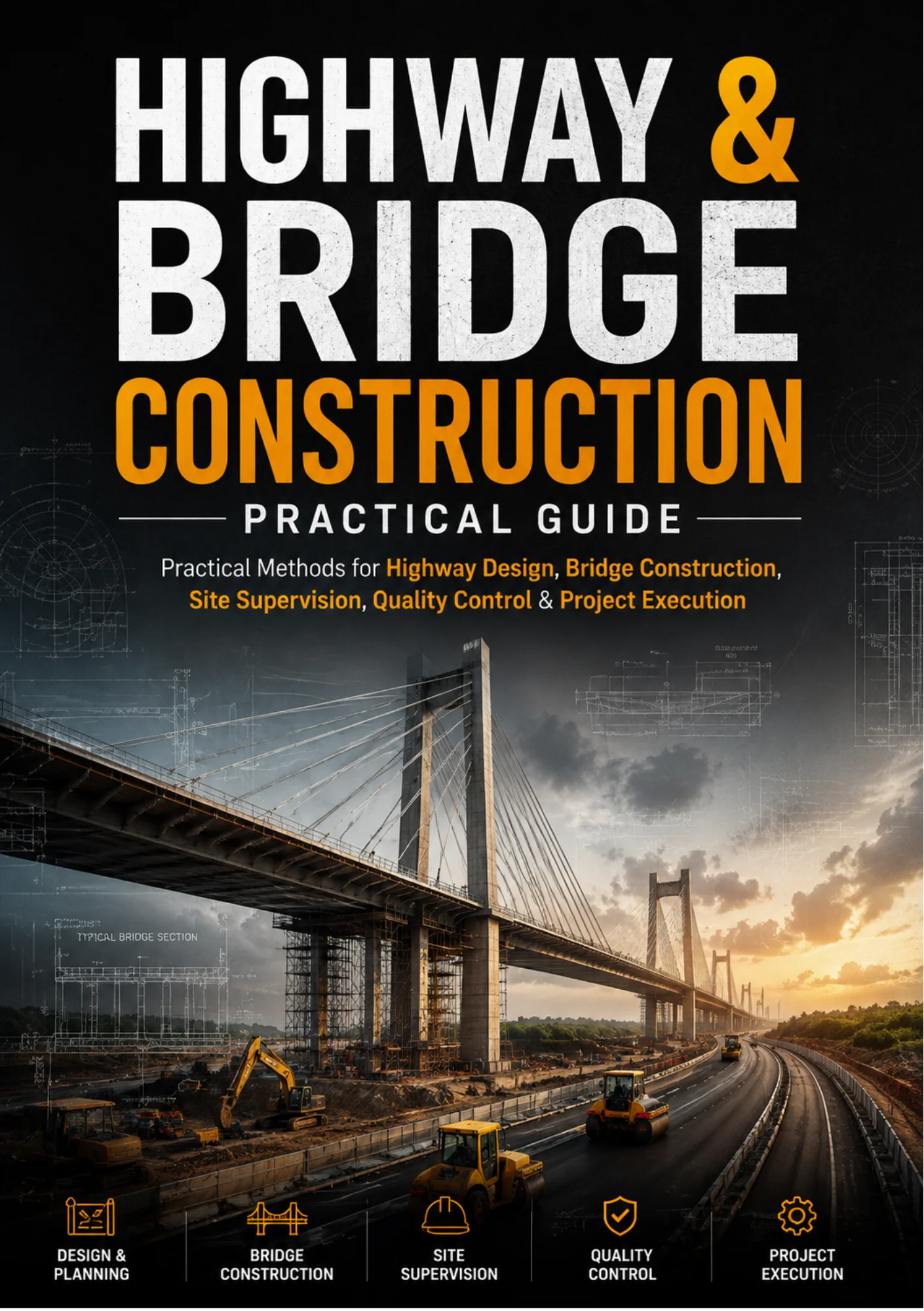
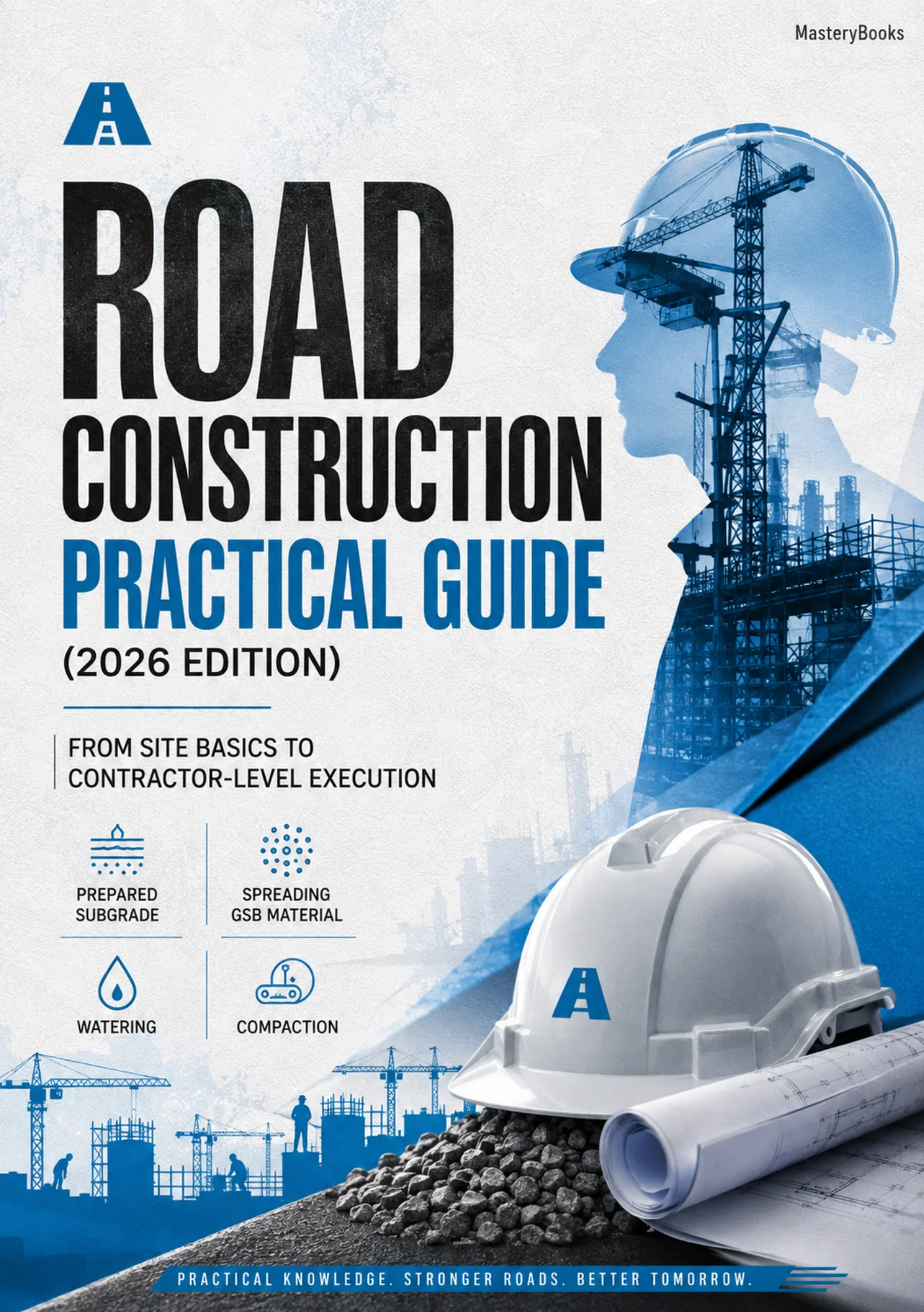
- MoRTH, IRC & PMGSY based
- Simple English — site terms as they are spoken
- Photos, tables & layer diagrams on every topic
- A5 size — fits the site bag
- No topic repeated across the two volumes
Six places where site work actually stops
These are not textbook examples. Every one of them has a chapter written around it.
Each of these has an answer somewhere — in a specification, in a senior's head, in a video you can't find again at 7 in the morning. The problem is not the answer. It is the time it takes to reach it. Open the chapter for the work in front of you today, and use it the same day.
A road is a load path, not a surface
Most road failures are not surface failures. They start below, in a layer that was signed off in a hurry. Book One takes each layer separately — material, thickness, moisture, rolling, test and acceptance.
- Surface course takes the wearSkid resistance, riding quality, laying temperature — where the driver judges your work.
- Binder course carries the structureDBM thickness and compaction decide whether rutting shows up in year two or year ten.
- Base course spreads the loadWMM gradation and moisture control — the layer most often passed in a hurry.
- Sub-base drains and distributesGSB is a drainage layer first. Block it, and water starts working against every layer above.
- Subgrade decides the lifespanCBR, moisture and compaction here quietly set the ceiling for the whole pavement.
Below ground to deck level — in the order it is built
Bridge work is unforgiving because most of it disappears from view. Book Two follows the structure upward, stage by stage, with the record you must hold at each stage.
- Bored pile — boring to castingCasing, bentonite, cage lowering, tremie concreting — the sequence that gives a defensible pile
- Pile load test & integrity testWhat is actually being proved, and what a report must contain
- Pile cap, pier & pier capReinforcement, shuttering and pour planning at each level
- Well foundation & cofferdamWhere they are chosen, and what goes wrong during sinking
- PSC girder casting & stressingCasting bed, ducts, jacking sequence and elongation records
- Girder launching, bearing & deck slabLaunching method, bearing setting and the deck pour
Two books, one continuous scope
Book One builds the road. Book Two takes the same engineer onto a National Highway package and a bridge. Nothing is repeated between them — where a topic belongs to Book One, Book Two cross-references it instead of rewriting it.
Road Construction — Practical Guide
Road system, layers, materials, testing, quantities and contractor-level decisions.
- 01–02How a road actually works · Types of roads used in India
- 03–04Soil & subgrade engineering · Subgrade preparation to start level
- 05–06GSB — drainage & stability · WMM — load bearing layer
- 07–09Bituminous layers overview · DBM · BC surface layer
- 10–12Aggregates · Bitumen types & properties · Mix design basics
- 13–15Road survey & layout · Machinery · Step-by-step workflow
- 16–18Field density tests · Material testing at site · Layer-wise quality checks
- 19–21Quantity calculation · Rate analysis · BOQ reading & preparation
- 22–24Cross section & drawing reading · Levels, camber & drainage
- 25–30Repair & maintenance · IRC & PMGSY · MB & documentation · Contractor decision making
Highway & Bridge Construction — Practical Guide
MoRTH system, rigid pavement, plants, culverts, piles, girders and RA billing.
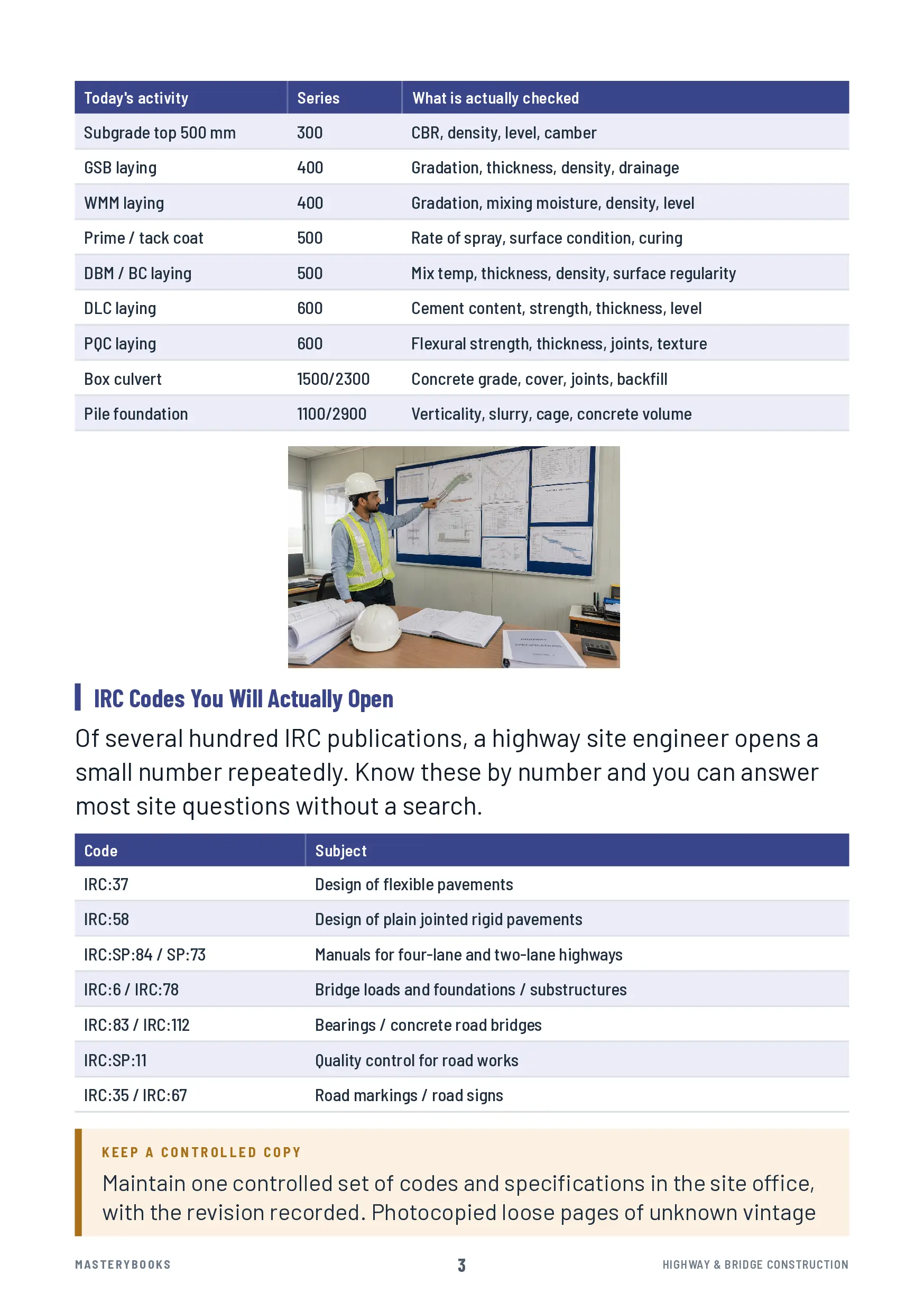
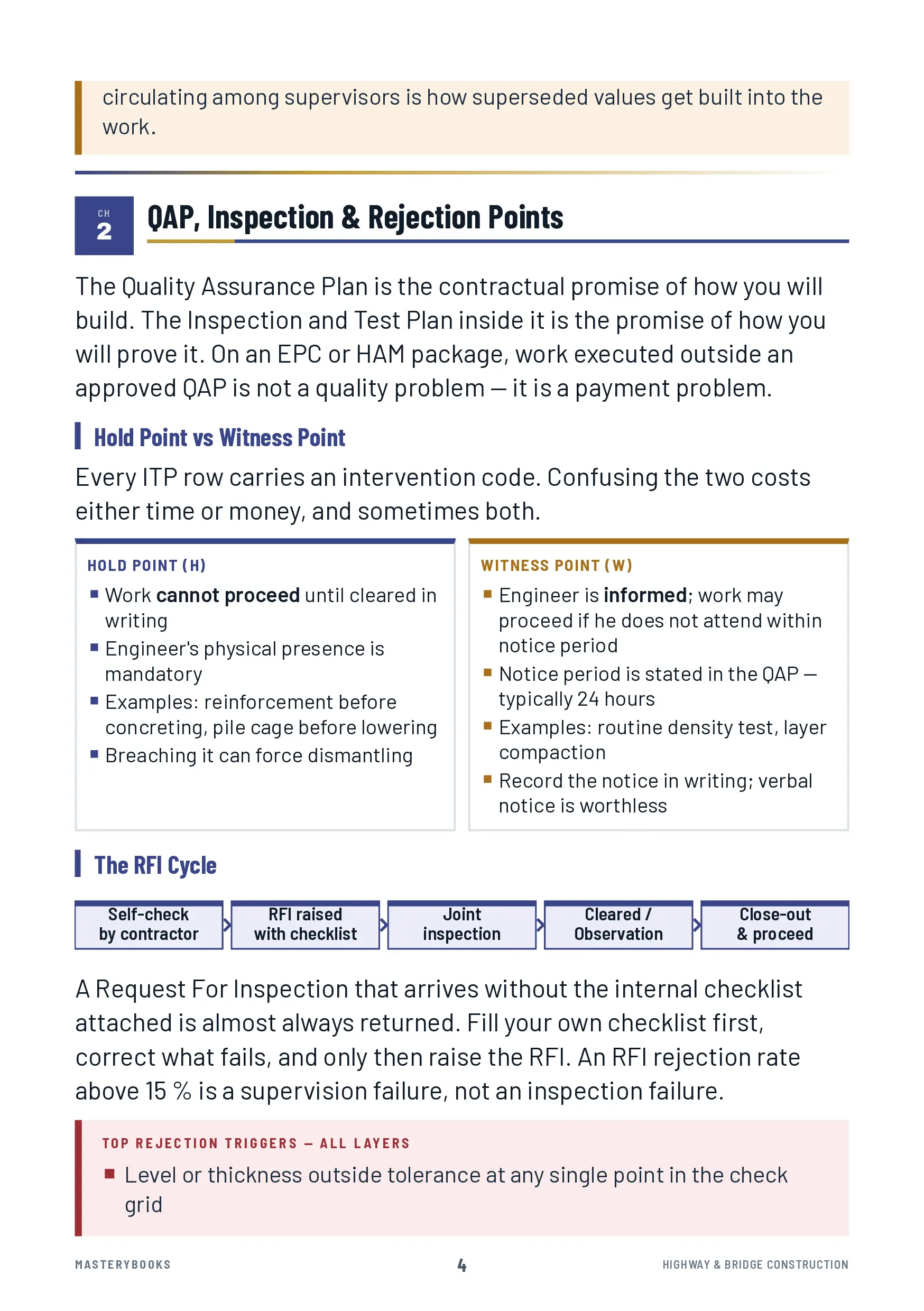
- 01MoRTH clause → site action map · QAP, inspection & rejection points
- 02Chainage & total station setting out · Superelevation · Vertical curves
- 03High embankment & borrow area · Soil stabilization · Geogrid & RE wall
- 04DLC · PQC execution · Joints — contraction, expansion, dowel & tie · PQC defects
- 05Hot mix plant calibration · Batching plant & sensor paver · Compaction train
- 06Hume pipe culvert · RCC box culvert · VUP / PUP & retaining wall
- 07Bored pile · Load & integrity test · Pile cap, pier & pier cap · Well foundation
- 07PSC girder casting & stressing · Launching, bearing & deck slab
- 08EPC / HAM / BOT · RA bill & MB at highway scale · Standard Data Book rate analysis
- 08Road furniture & safety works — crash barrier, signage, marking
Open all 58 chapters before you decide
Nothing is hidden. Both volumes, chapter by chapter.
BOOK ONE Road system, soil & the granular layers Ch. 1–6
- How a road actually works — load transfer, why layers exist, real failure causes
- Types of roads used in India — flexible, rigid and composite pavement
- Soil & subgrade engineering basics — classification, CBR, moisture
- Subgrade preparation — ground to start level, common preparation mistakes
- Granular Sub Base (GSB) — drainage function, gradation, laying & rolling
- Wet Mix Macadam (WMM) — mechanical mixing, moisture control, compaction
BOOK ONE Bituminous layers, materials & mix design Ch. 7–12
- Bituminous layers overview — what each layer is responsible for
- Dense Bituminous Macadam (DBM) — the structural layer
- Bituminous Concrete (BC) — surface layer, laying temperature and finish
- Aggregates — selection and testing (90–95% of the mix)
- Bitumen — types, grades and properties
- Mix design basics — proportioning for strength, durability and economy
BOOK ONE Survey, machinery, workflow & testing Ch. 13–18
- Road survey & layout setup — alignment and levels before work starts
- Machinery used in road construction and what each one decides
- Step-by-step road construction workflow — layer by layer
- Field density tests — verifying compaction instead of assuming it
- Material testing at site — what to check before and during use
- Layer-wise quality checks — clearing one layer before the next
BOOK ONE Quantities, BOQ, drawings & drainage Ch. 19–24
- Quantity calculation — material required for each layer
- Rate analysis — cost per unit of work, item by item
- BOQ reading & preparation
- Cross section & road drawing reading
- Levels, camber & drainage system — water is the real enemy
- Road failures — what each defect is telling you
BOOK ONE Repair, standards, records & decisions Ch. 25–30
- Repair methods & maintenance
- IRC & PMGSY basics, simplified
- Site documentation & Measurement Book
- Mistakes new engineers make on site
- Contractor-level decision making — cost against quality
- How to execute a full road project, start to finish
BOOK TWO MoRTH system, setting out & embankment Sections 1–3
- MoRTH clause → site action map — the 100 to 3000 series, and where you meet each on site
- QAP, inspection & rejection points
- Chainage, baseline & total station setting out
- Superelevation & transition curve — field layout
- Vertical curve & level transfer
- High embankment & borrow area execution
- Lime & cement soil stabilization
- Geotextile, geogrid & RE wall execution
BOOK TWO Rigid pavement, plants & culverts Sections 4–6
- DLC layer execution
- PQC execution — slipform paver and fixed form
- Joints — contraction, expansion, dowel & tie
- PQC defects & rectification
- Hot mix plant — calibration & control
- Batching plant & sensor paver
- Compaction train & trial patch
- Hume pipe culvert (NP3 / NP4) · RCC box culvert — full execution
- VUP / PUP / LVUP & retaining wall
BOOK TWO Bridge construction, contract & safety Sections 7–8
- Bored pile — boring to casting
- Pile load test & integrity test
- Pile cap, pier & pier cap
- Well foundation & cofferdam
- PSC girder casting & stressing
- Girder launching, bearing & deck slab
- EPC / HAM / BOT — the site engineer's view
- RA bill & Measurement Book at highway scale
- Standard Data Book — rate analysis
- Road furniture & safety works
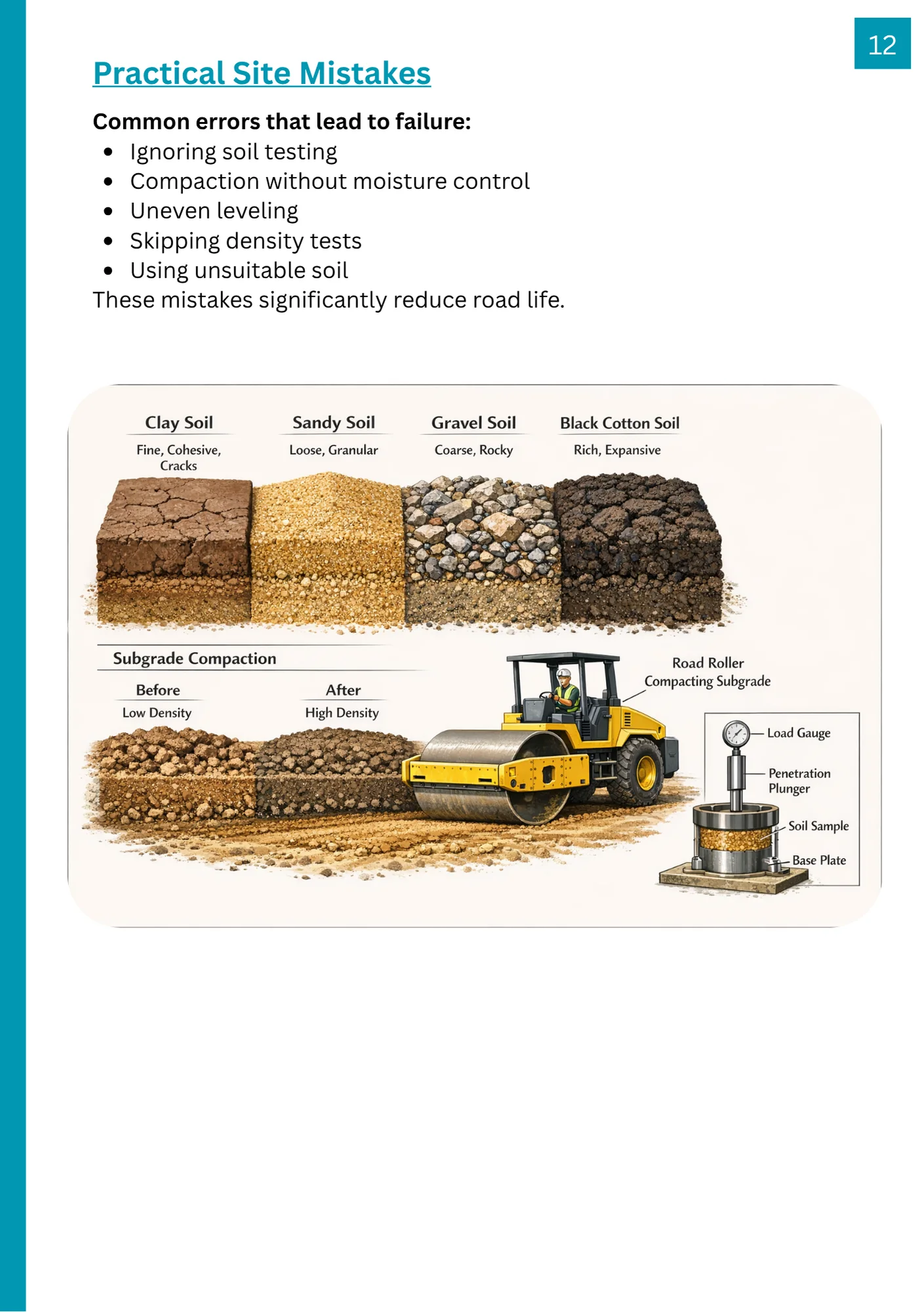
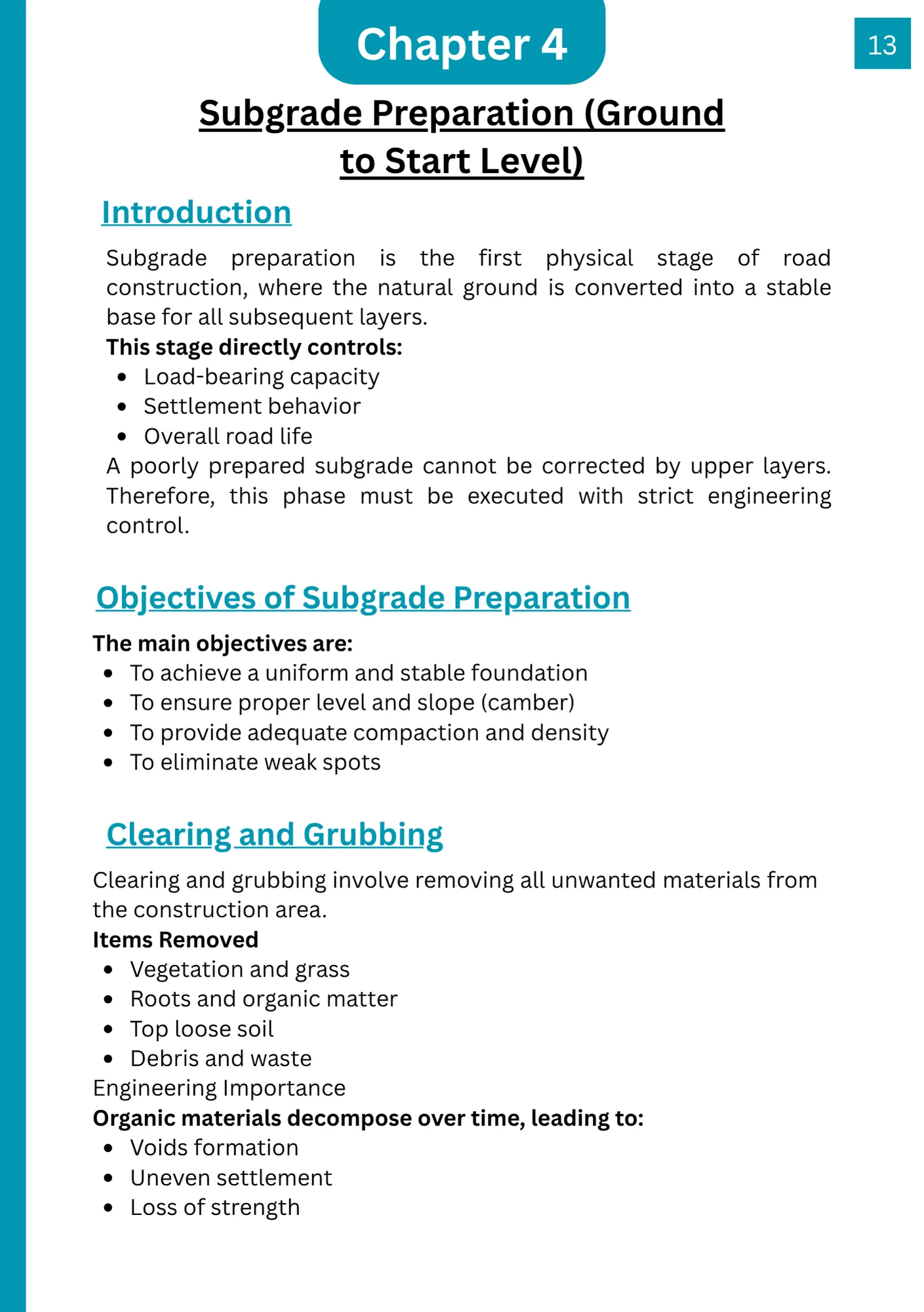
No mockups. This is what is inside.
Photos, tables, layer diagrams and site sequences — exactly as printed. Touch a page to pause.
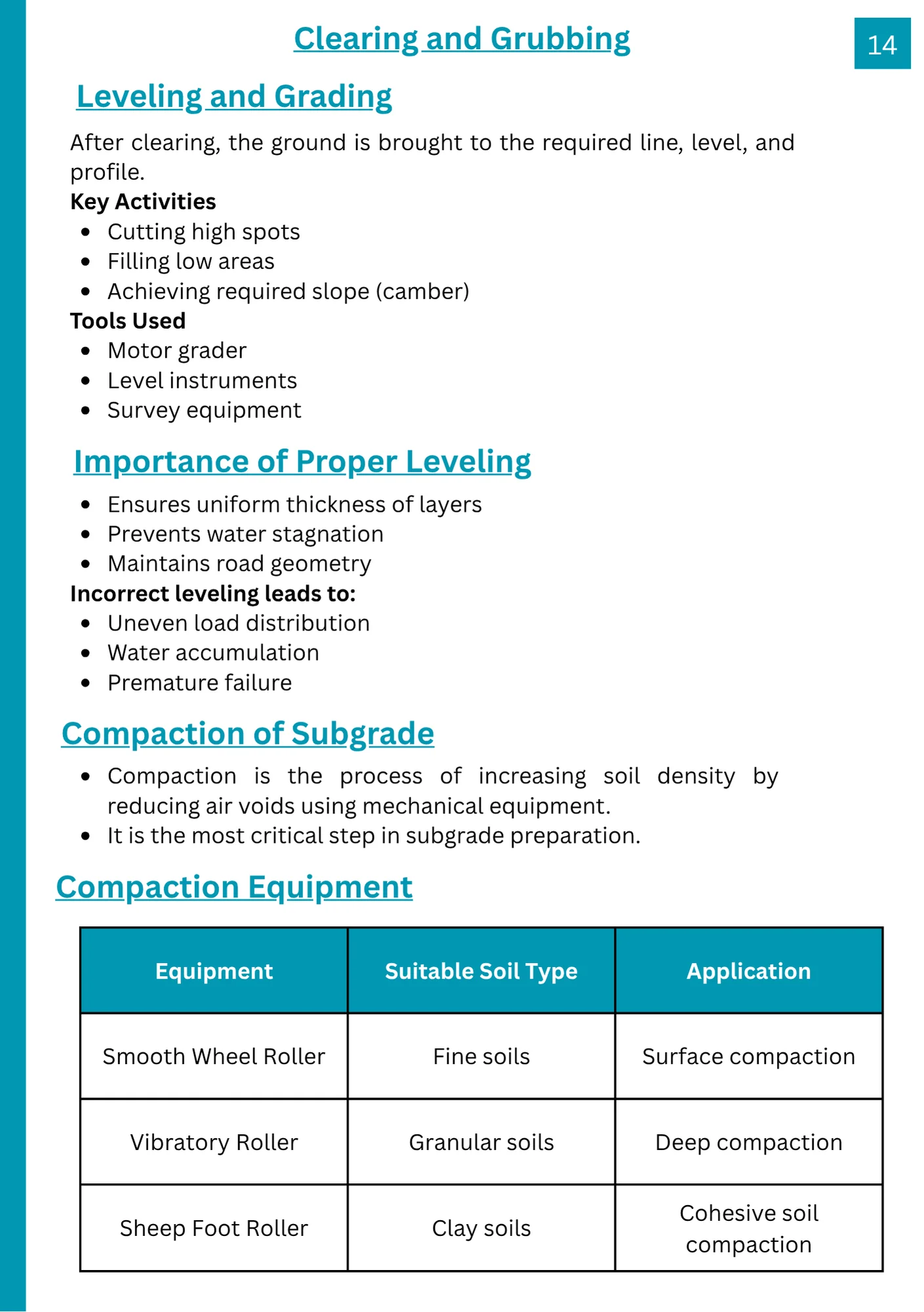
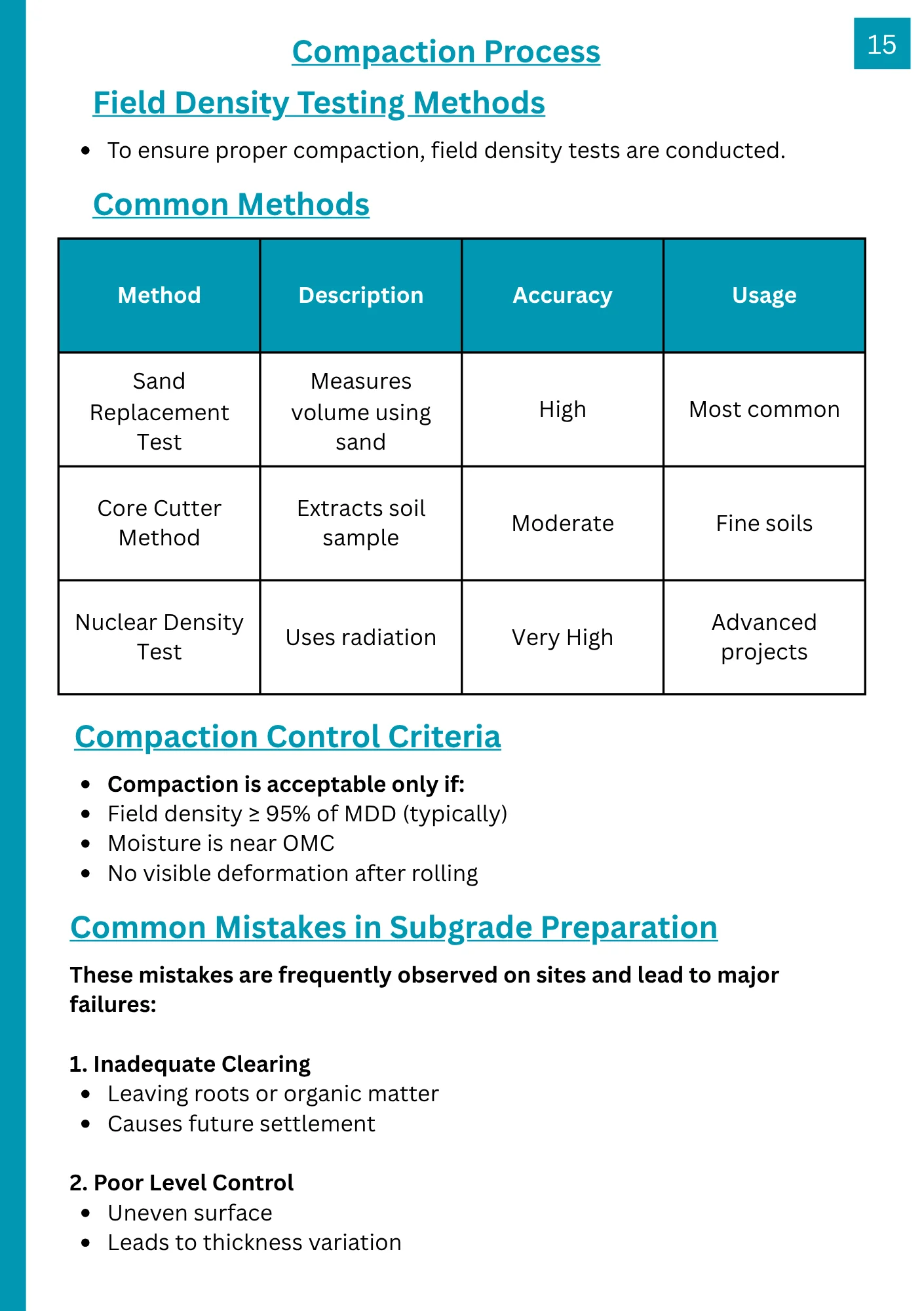
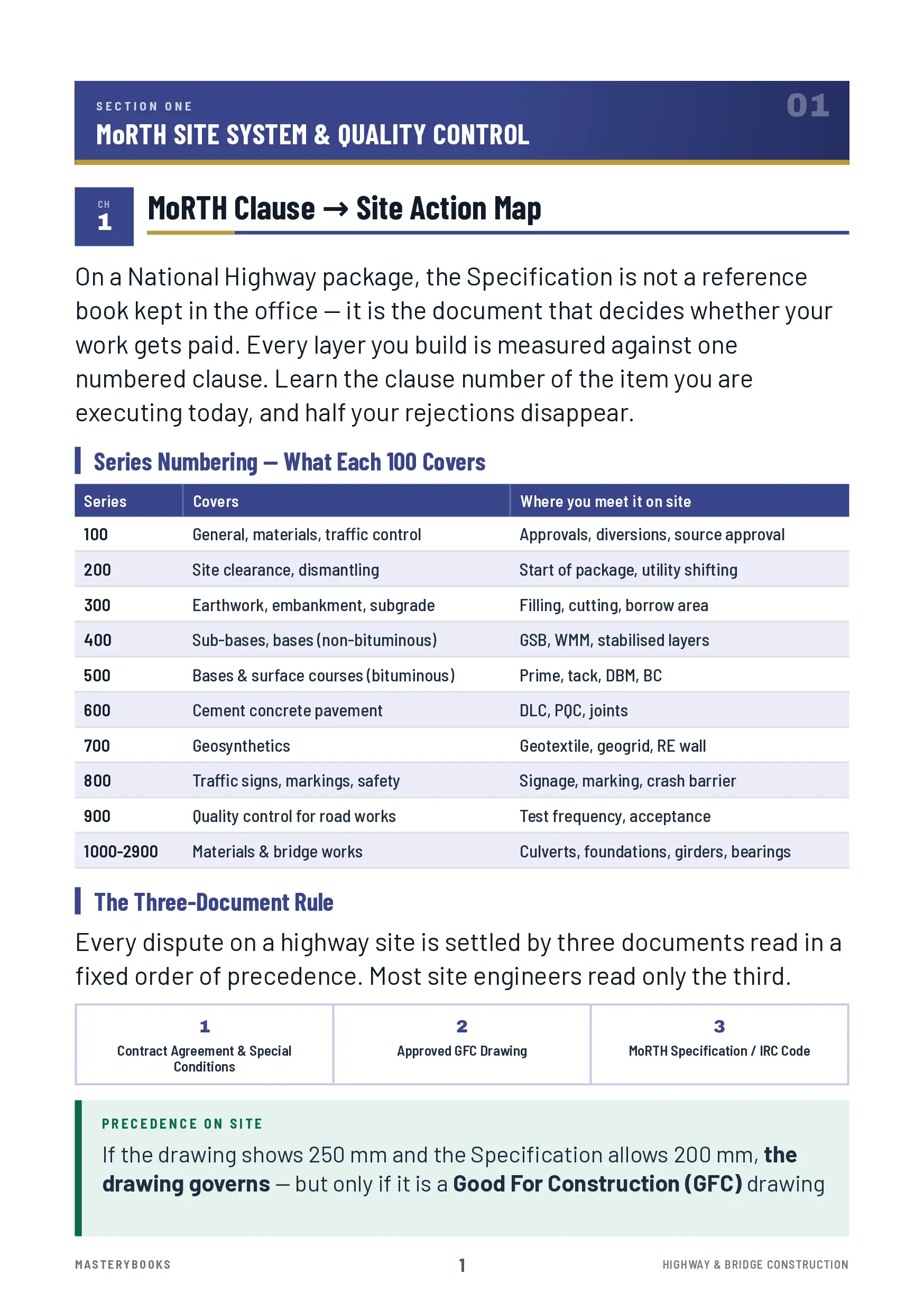
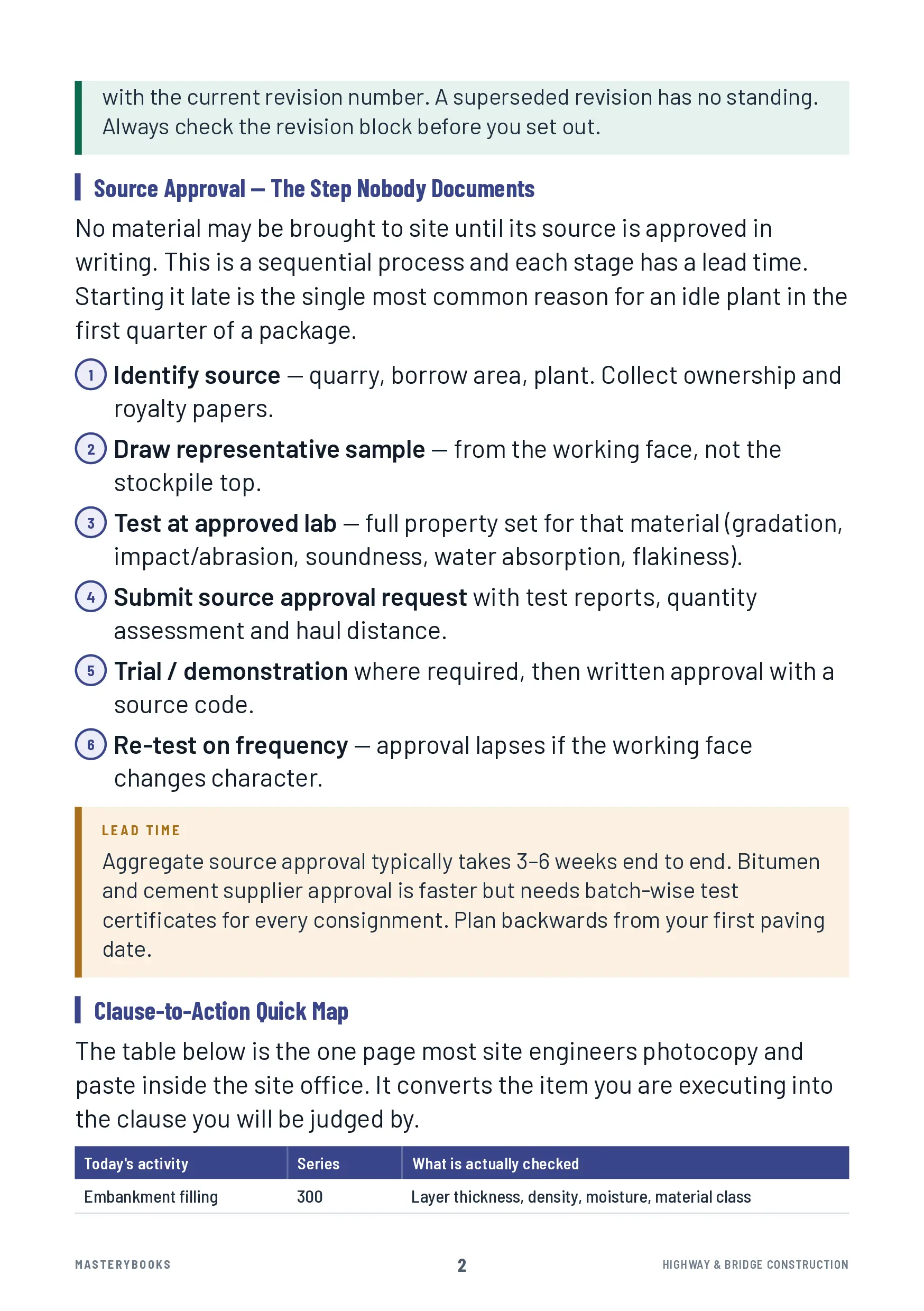
From engineers who use it on site
Site engineers, supervisors and project engineers working on live road and highway packages.

Road construction ka practical kaam karte waqt sirf theory se kaam nahi chalta. Is guide mein subgrade preparation, GSB, watering aur compaction jaise steps ko site ke tareeke se samjhaya gaya hai. Site par kaam karne walon ke liye kaafi kaam ka reference hai.

Is book ki sabse badi baat iska practical approach hai. Road work mein kis stage par kya check karna hai aur common mistakes kaise avoid karni hain, ye clear ho gaya. Beginner se lekar site supervisor tak, sabke liye language easy rakhi hai.

Main highway projects par kaam karta hoon, isliye mujhe aisi guide chahiye thi jo sirf definitions tak limited na ho. Book mein actual site execution wale topics systematically cover kiye gaye hain. Quick reference ke liye bhi kaafi convenient hai.

Highway aur bridge construction ko ek saath practical nazariye se samajhna tha, aur ye guide usmein kaam aayi. Design, site supervision, quality control aur project execution — sab ek hi jagah mil jaata hai. Site par kaam karne wale engineer ke liye useful material hai.

Bridge construction ke saath highway execution aur quality control ko jodkar samajhna pehle mushkil lagta tha. Is guide mein topics practical sequence mein explain kiye hain, isliye poore project execution ki picture saaf ho gayi. Experienced logon ke liye bhi handy reference hai.
Who this is for — and who it isn't
Written plainly, so the money goes to the right place.
Built for
- Site engineers on road, highway and bridge packages
- Civil supervisors who have to clear a layer before the next one starts
- Contractors and project engineers handling BOQ, RA bills and quality control
- Diploma and B.E. civil students about to join a site
- Anyone who wants execution sequence, not chapter-end questions
Not for
- Anyone preparing for a competitive exam — this is not an MCQ book
- Anyone looking for approved design calculations or drawings
- Anyone who wants the contract itself replaced — MoRTH, IRC and the GFC drawings always prevail
- Anyone who will keep it on the shelf — this is a book to open on the working day
Choose your format
Same content in both — 58 chapters across two volumes. The only question is whether you want it in hand or on the phone.
Soft Copy (PDF)
- Both books — 58 chapters, 194 pages
- Lifetime online access, right after ordering
- Opens on mobile, tablet and laptop
- Search a chapter while standing on site
Hard Copy — Both Books
- Both printed books, A5 — fits the site bag
- Soft copy free — lifetime online access the moment you order
- Works on site with no network and no battery
- Mark the page, write your own values and levels on it
- Free delivery all over India
Soft copy instantly, books delivered to your address.
Common questions
Which language are the books in?
Simple English, using the site terms exactly as they are spoken on Indian projects — GSB, WMM, DBM, FDT, PQC, RA bill. Easy to follow even if English is not your first language.
I am a fresher / diploma student. Will I understand it?
Book One starts from how a road works and builds up layer by layer, so a fresher can follow it. Book Two assumes Book One and moves to National Highway scale — MoRTH clauses, PQC, piles and girders. Together they take you from the basics to package-level execution.
Is anything repeated between the two books?
No. Where a topic belongs to Book One, Book Two cross-references it instead of rewriting it. 58 separate chapters in total.
Does it follow MoRTH and IRC?
Yes — the values and sequences are built around MoRTH Specifications for Road and Bridge Works, IRC codes, IS standards and PMGSY guidelines. They are working references to build site understanding, not a replacement for the contract.
Is the soft copy really free with the hard copy?
Yes. Order the hard copy and you get lifetime online access immediately — you don't wait for the books to arrive. No extra charge.
Can I use these values directly on my project?
Use them to understand and cross-check. On a live project the governing documents are, in order: the contract agreement, the approved GFC drawings of the current revision, and the latest MoRTH, IRC and IS editions. Wherever anything differs, those documents prevail.